News
KSeF: amid delays and technical issues, where are we with e-invoicing in Poland?

In 2021, the Polish government introduced a bill to promote e-invoicing, which provided, among other things, that all invoices were to be issued and sent via the National e-Invoicing System (abbreviated in Polish as KSeF). VAT taxpayers in Poland would have been required to comply by receiving incentives including a one-third reduction in VAT refund times (from 60 to 40 days) and an exemption from filing the JPK_FA file, i.e. the Single Audit Files that are normally sent to the tax authorities.
The KSeF platform has been online since 1 January 2022 and some Polish companies are already using it voluntarily. Structured invoices, handled via KSeF as XML files, will initially coexist with paper and other electronic formats. The platform provides notifications on invoice status, including assigned numbers, any rejections and downtime notices. Invoices can be searched, downloaded in their original format or as a PDF and archived for 10 years on the portal. In short, the functions of KSeF therefore include issuing, receiving and validating electronic invoices, assigning unique IDs and providing an archive function for tax documents.

The path towards the implementation of KSeF in Poland has, however, been marked by numerous twists and turns, delays and significant changes. Let's retrace the chronology of what has been announced so far and the future milestones that will lead to the adoption of Polish e-invoicing.
After several announcements of postponement regarding the adoption timeline, the project was finally scheduled to start on 1 July 2024, but on 19 January this year it was unexpectedly postponed by the Minister of Finance Andrzej Domański. The reason? Errors were diagnosed on the KSeF platform and an external IT audit was therefore needed to determine whether to continue with the system or possibly adopt a completely different one. The audit in fact highlighted serious technical shortcomings, prompting the Government to reconsider its implementation strategy and postponing KSeF mandatory use by almost two years, i.e. from 1 February 2026.
The draft amendment to the VAT law and related laws, including the postponement of KSeF implementation, has in recent months been subject to legislative processes and detailed public consultations. The postponement of KSeF implementation to 2026 has meanwhile been officially approved by the Council of Ministers and the Ministry of Finance has outlined a two-phase implementation plan for KSeF, with different deadlines for large and small businesses. 1 February 2026 for companies with turnover above PLN 200 million in the previous year and 1 April 2026 for the others.
The legislative changes have meanwhile been finalised to accommodate the new rescheduled dates and other technical adjustments to KSeF to simplify certain procedures. For example, the management of fines, the generation of emergency QR codes and the voluntary use of KSeF for B2C invoices. The Ministry has prepared some training and support activities for entrepreneurs, including staff training, with individual meetings and an informational public campaign.
Experts have criticised the two-phase implementation plan, arguing that simultaneous implementation for all taxpayers would be preferable. At present, the topic is the subject of broad debate in the country: the discussions concern, among other things, adapting KSeF to European standards, in order to align it as closely as possible with the expected EU requirements. The decision to delay the implementation of the e-invoicing portal in Poland, on the other hand, has met with broad approval because of the obvious technical flaws identified, but for some companies that had already invested in technical preparation it has entailed unexpected and even substantial costs. The Ministry of Finance has also suffered significant economic losses from these delays, currently estimated at around PLN 30 million, about 7 million euro.
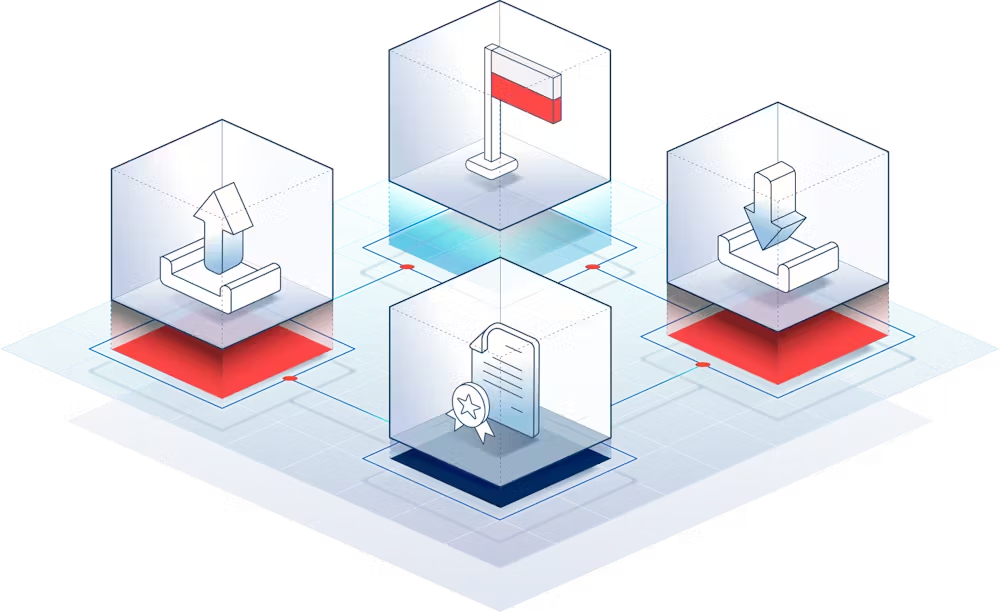
Want to be ready for this important change and test e-invoicing with KSeF immediately and without commitment? A-Cube's certified REST API platform allows you to exchange electronic invoices with the Polish authorities and can be integrated with all software. A secure, up-to-date and easy-to-use option for companies, regardless of their size. A-Cube APIs help companies in the Polish market comply with local regulations, providing all the features and convenience expected from a cutting-edge invoicing and communication system, always updated with the latest regulations in force. Request immediate free access to the sandbox from this page or contact us for any technical and commercial information at info@acubeapi.com.